Procurement decision sheet
Soybean Milk Powder
Instant soybean milk powder for plant-based beverages, nutrition powders, bakery, dairy alternative formulations and food service applications. Procurement data covers allergen status, protein control, sterilization, spray drying, CCP checkpoints, packaging, MOQ and batch COA request.
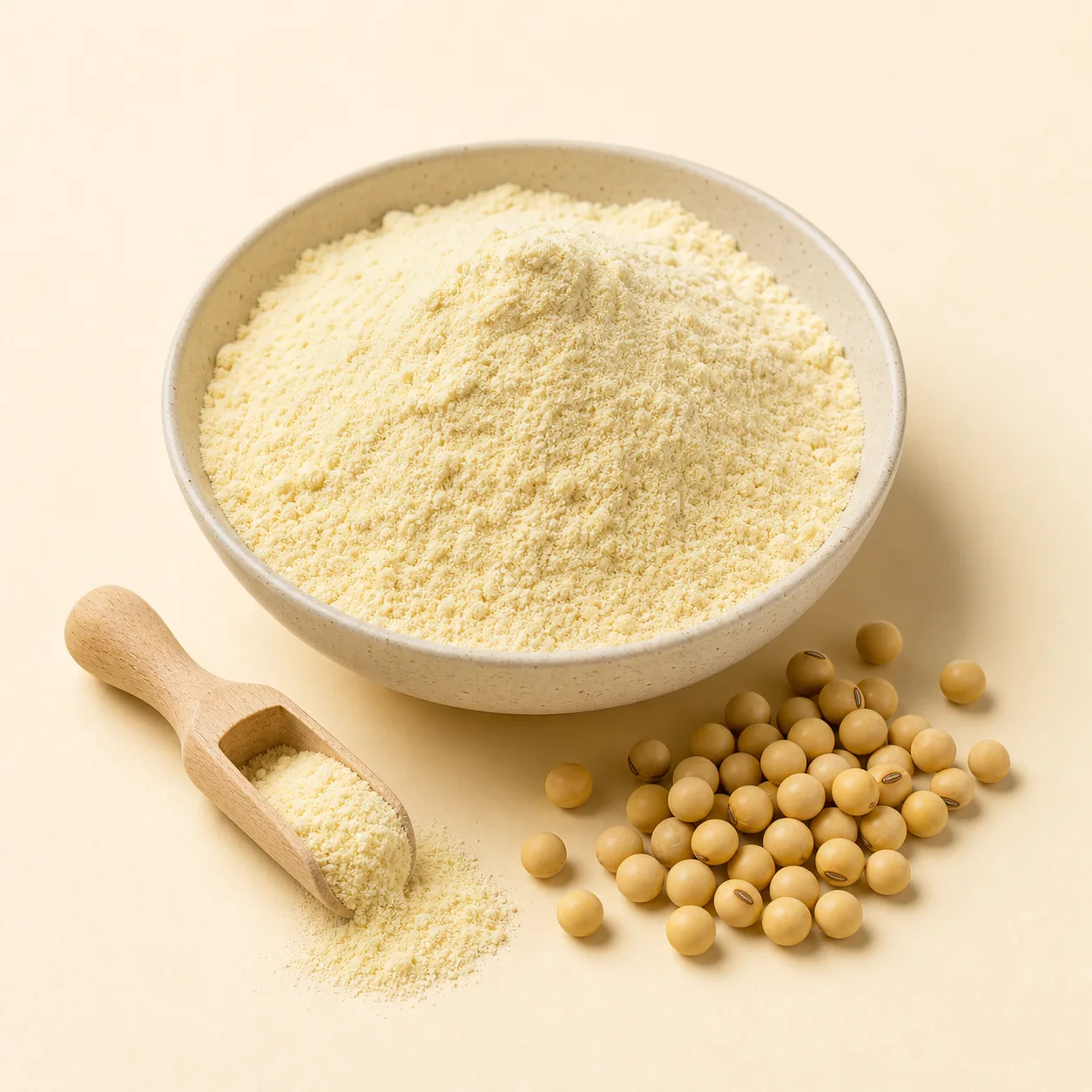
Marker, source and physical properties are ready to verify against your formula target.
COA, TDS, MSDS, allergen, GMO, solvent and contaminant files can be requested as one package.
Sample, MOQ, lead time and packaging are aligned before bulk commitment.
Decision Matrix
Can this ingredient move into evaluation?
Procurement Overview
Soybean Milk Powder is an instant plant-based powder made from selected soybeans through controlled selection, thermal treatment, separation, sterilization, condensing, spray drying, packing and testing. For buyers, the key review points are allergen declaration, protein and fat control, instant performance, microbial control, CCP records, packaging and current-batch COA.
Process Control Summary
| Control Point | Process Stage | Buyer Relevance |
|---|---|---|
| CCP1 | Finely selected soybean | Controls visible defects and foreign material before processing |
| CCP2 | Vacuum sterilization, 135-143 deg C | Supports microbial risk reduction |
| CCP3 | Condensing, 92-100 deg C | Controls concentration and protein-related process parameters |
| CCP4 | Packing | Protects finished powder from moisture and contamination |
Application Notes
Soybean Milk Powder is suitable for instant soybean milk beverages, food service drink mixes, nutrition powders and selected bakery or confectionery applications. Buyers should run pilot tests for dispersion, residue, flavor, sweetness balance, foam, serving concentration and stability in the target packaging format.
Buyer Risk Checklist
- Confirm soy allergen declaration before label design.
- Request current-batch COA before registration, trial production or bulk purchase.
- Confirm protein, fat, moisture and microbiology against your target specification.
- Test dispersion and mouthfeel in the exact preparation method, including water temperature.
- Confirm whether added ingredients apply to the selected SKU and whether C42/D42 exclusions are relevant.
Technical Data Sheet (TDS)
Specification snapshot for technical review
| Parameters | Specification Range / Value | Buyer note |
|---|---|---|
| Identity / Product Name | Soybean Milk Powder | Confirm by supplier specification |
| Identity / Botanical Source | Glycine max (L.) Merr. | Confirm by raw material record |
| Allergen / Soy | Contains soy | Declare in label and import review |
| Physical / Appearance | Light yellow to creamy fine powder | Visual check by current batch |
| Physical / Flavor | Characteristic soybean flavor; no obvious foreign odor | Sensory check by batch |
| Physical / Particle Size | 80 mesh standard; confirm by specification | Confirm by current-batch COA |
| Performance / Solubility / Dispersibility | Dispersible in hot or warm water | Test in target formula |
| Nutrition / Protein | Batch-specific | Confirm by current-batch COA |
| Nutrition / Fat | Batch-specific | Confirm by current-batch COA |
| Chemical / Loss on Drying | <= 5.0% typical target | Confirm by current-batch COA |
| Chemical / Ash | <= 6.0% typical target | Confirm by current-batch COA |
| Process / Vacuum Sterilization | 135-143 deg C, CCP2 | Confirm by production record |
| Process / Condensing | 92-100 deg C, CCP3 | Confirm by production record |
| Contaminants / Heavy Metals | Confirm against destination market limit | Confirm by current-batch COA |
| Microbiology / Total Plate Count | <= 10,000 cfu/g typical target | Confirm by current-batch COA |
| Microbiology / Yeast and Mold | <= 100 cfu/g typical target | Confirm by current-batch COA |
| Microbiology / Coliforms | Negative or according to agreed specification | Confirm by current-batch COA |
| Microbiology / E. coli | Negative | Confirm by current-batch COA |
| Microbiology / Salmonella | Negative | Confirm by current-batch COA |
| Storage / Shelf Life | 18-24 months when sealed and stored correctly | Confirm by product label and batch file |
| Storage / Storage Conditions | Cool, dry place; protect from heat, moisture and direct sunlight | Keep sealed after opening |
* Note: These values are typical specifications. Each batch is supplied with a specific Certificate of Analysis (COA) matching these parameters.
Target Product Formulations
Formulation suitability before sampling
Primary application; confirm dispersion, flavor, foam, residue and serving concentration in the target formula.
Suitable for meal replacement and nutrition blends; confirm protein level, fat content and allergen labeling.
Useful for soy flavor and nutrition positioning, but heat behavior, color and flavor should be tested.
Suitable for dry beverage mixes; test performance in hot and cold preparation conditions.
Can support plant-based concepts, but emulsification, mouthfeel and formula stability need pilot testing.
Suitability guidelines based on physical extract characteristics.
Document Compliance Library
Request the files your quality team needs
Quality Assurance & Seed-to-Drum Traceability Flow
Production & Processing Flow
Soybean Selection
Soybean raw material is received and selected for identity, appearance, foreign matter and supplier qualification.
Finely Selected (CCP1)
Critical selection checkpoint to control non-conforming beans and visible foreign material before processing.
Drying
Selected soybeans are dried to support stable downstream stripping, milling and thermal treatment.
Stripping
Beans are stripped or dehulled according to processing requirements to improve powder quality and texture.
Inactivation
Thermal inactivation is applied to control enzyme activity and support flavor and safety requirements.
Milling
Processed soybeans are milled to prepare for slurry preparation and further heat treatment.
Heating (100 deg C)
Material is heated at about 100 deg C before residue separation, supporting extraction and microbial control.
Separation (Residue)
Insoluble residue is separated to improve final beverage texture and powder performance.
Vacuum Sterilization (CCP2)
Vacuum sterilization at 135-143 deg C is used as a critical control point for microbial risk reduction.
Adding Ingredients
Formula ingredients may be added where applicable. This step is not used for C42/D42 according to the provided process note.
Condensing (CCP3)
Condensing controls protein and concentration parameters at 92-100 deg C as a critical process checkpoint.
Spray Drying
Concentrated material is spray dried into stable soybean milk powder.
Packing (CCP4)
Finished powder is packed under controlled conditions to protect against moisture and contamination.
Metal Detection
Packed product passes through metal detection before release testing and shipment.
Testing
Current batch is tested for physical, chemical, microbiological and contaminant requirements.
Storage
Approved goods are stored in a cool, dry warehouse before dispatch.
Buyer FAQ
Questions buyers usually confirm before RFQ
Does soybean milk powder contain allergens? +
Yes. Soybean milk powder contains soy and should be handled as a soy allergen. Buyers should confirm allergen statements before label review.
Is this product fully soluble? +
It is designed for instant beverage use, but dispersion, mouthfeel and residue should be tested in the target formula and water temperature.
Can I request current batch COA? +
Yes. Current batch COA is available on request after confirming target specification, order quantity and destination market.
What are the key process control points? +
The provided process includes CCP1 selection, CCP2 vacuum sterilization, CCP3 condensing and CCP4 packing.
Can formula ingredients be adjusted? +
Customization may be discussed, but ingredient addition depends on the target SKU and process route. The provided flow notes that this step is not used for C42/D42.
Buyer Risk Checklist
Points to confirm before sample approval
Use this checklist to reduce back-and-forth between sourcing, R&D, QA and regulatory teams.
Market limits
Confirm heavy metals, pesticides, residual solvents and microbiology against your target market.
Formula behavior
Check solubility, color, taste, pH and heat stability in the intended dosage form.
Label claims
Use organic, Halal, Kosher, Non-GMO, allergen-free or gluten-free claims only with matching batch support.
Commercial fit
Align MOQ, packaging, shelf life, incoterms and lead time before pilot or bulk purchasing.