From Sample to Bulk Order: A Quality Verification Workflow for Ingredient Buyers
A step-by-step workflow for moving from sample approval to bulk purchasing while controlling specification, batch consistency, documentation and shipment risk.
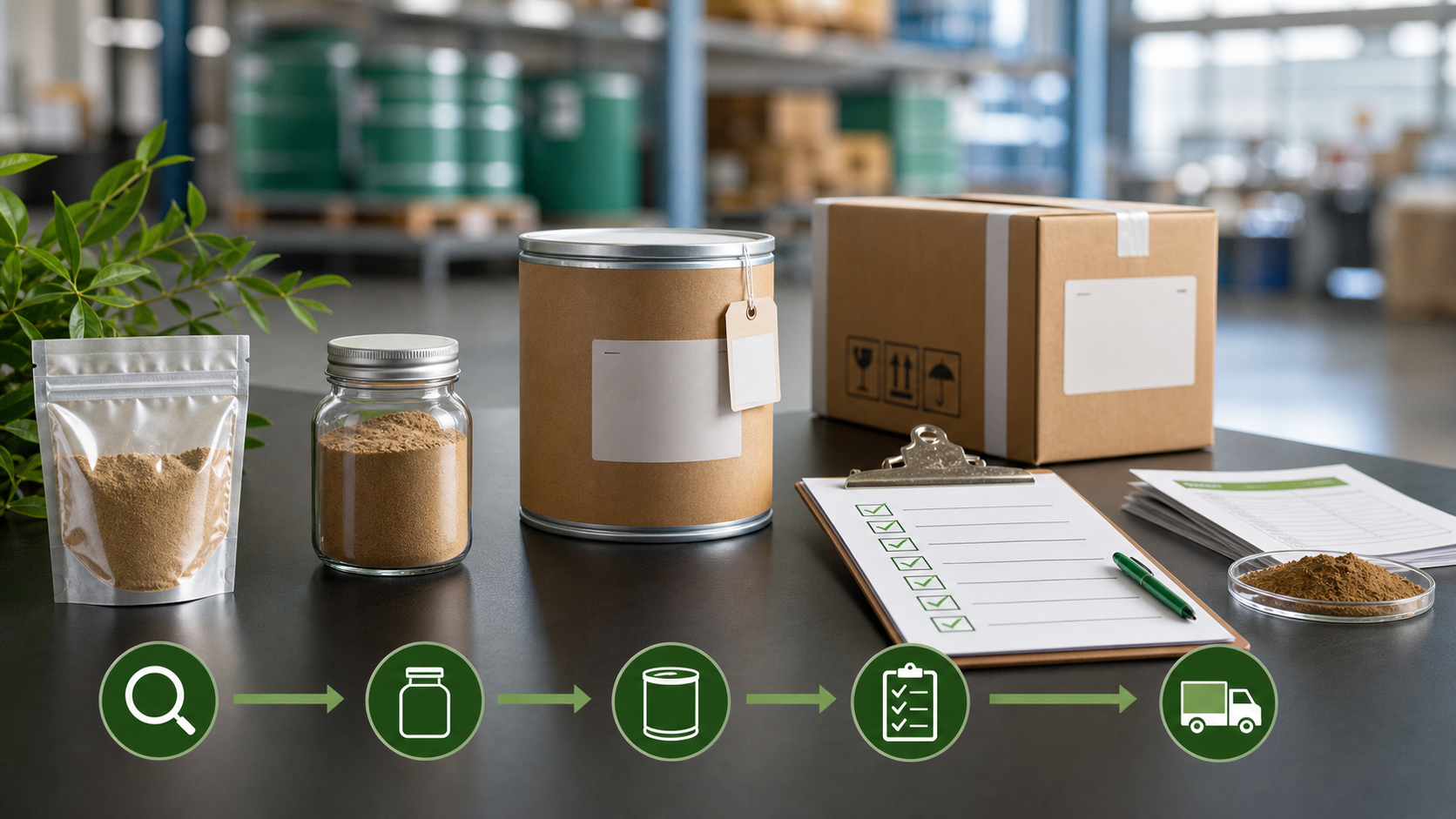
Why sample approval is not the end of supplier evaluation
Sample approval is only one step in ingredient sourcing. A sample can confirm appearance, taste, solubility and basic application fit, but bulk order risk remains unless the buyer controls specification, batch documentation and shipment requirements.
A professional workflow helps avoid the common problem of approving one sample but receiving a bulk batch with different color, mesh size, assay, moisture or documentation.
Step 1: Define the approved sample standard
When a sample is accepted, record the details clearly. Do not rely only on informal memory or photos.
Record:
- Sample name
- Supplier name
- Sample batch number
- Appearance
- Color and odor
- Mesh or particle size
- Application test result
- Any agreed specification
If the sample is used for formulation trials, keep a retained sample for future comparison.
Step 2: Request specification and current-batch COA
Before moving to bulk, ask the supplier to confirm the commercial specification and provide a current-batch COA for the material intended for shipment.
Compare:
- Sample specification vs bulk specification
- COA results vs acceptance limits
- Active marker result
- Moisture
- Microbiology
- Heavy metals and pesticide residues where relevant
Step 3: Confirm packaging and storage
Packaging can affect moisture, oxidation, contamination risk and logistics cost. Confirm whether the bulk packaging matches your warehouse and production needs.
Check:
- Drum, carton or bag format
- Inner food-grade bag
- Net weight per unit
- Palletization
- Label information
- Shelf life and storage condition
Step 4: Confirm commercial and export details
Before purchase order, align MOQ, lead time, Incoterms, shipping method and required export documents. This avoids delays after payment or production.
Confirm:
- MOQ
- Lead time
- Sample-to-bulk availability
- Incoterms
- Shipping route
- Export documentation
- Certificate requirements
Step 5: Use pre-shipment review for important orders
For larger or quality-sensitive orders, request pre-shipment documents or photos. If needed, arrange third-party testing based on the target market or customer requirement.
Useful pre-shipment checks:
- Final COA
- Packing photos
- Label confirmation
- Batch number confirmation
- Third-party test report when required
Procurement takeaway
Good sourcing is not only finding a good sample. It is building a controlled path from sample approval to bulk delivery. The clearer the workflow, the lower the risk of batch mismatch, delayed documents and avoidable disputes.