Extract Ratio vs Active Marker: Why 10:1 Does Not Always Mean Stronger
Understand the difference between extract ratio and standardized active marker so your team can compare botanical extract quotes more accurately.
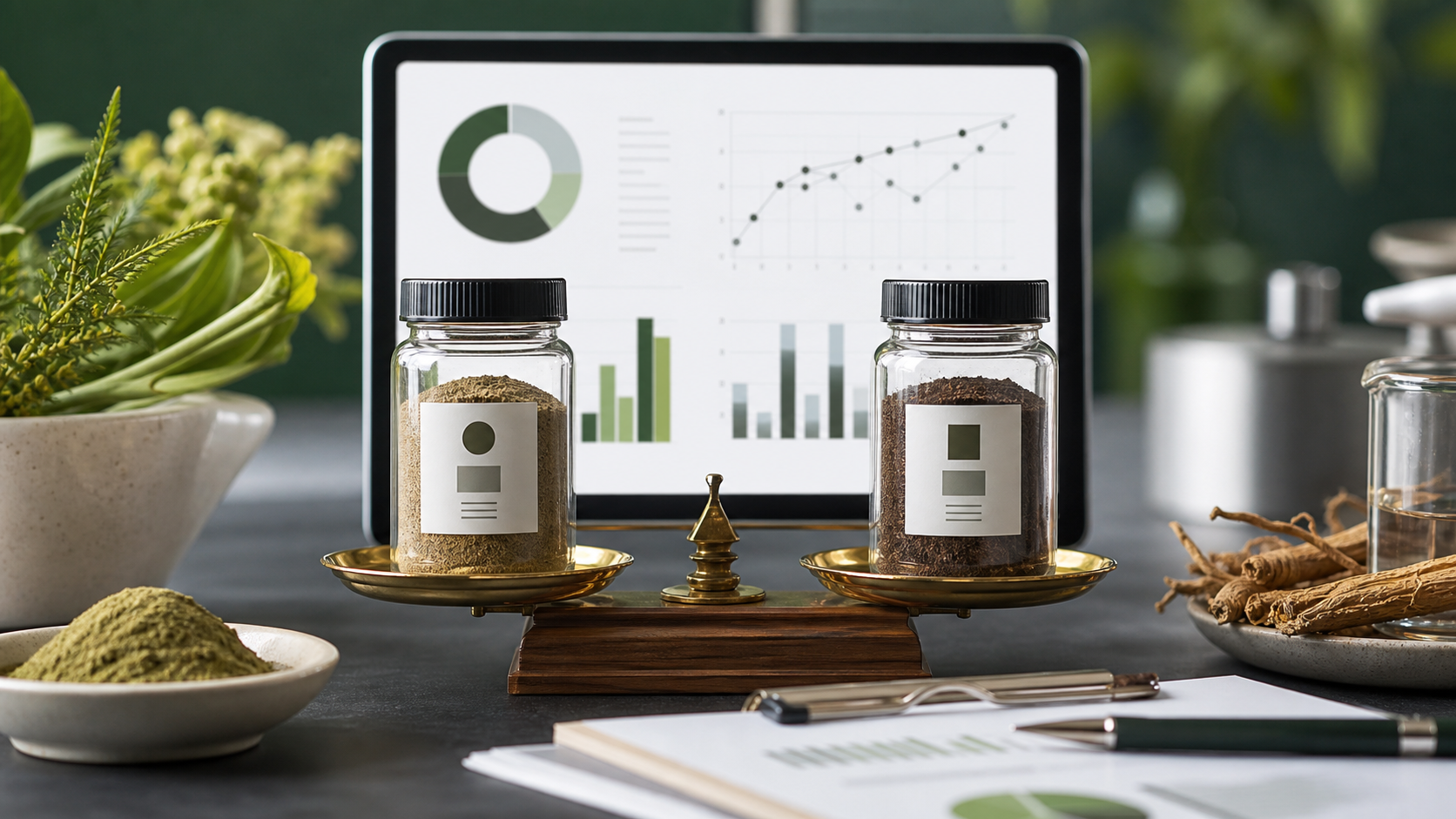
A common sourcing misunderstanding
Many buyers compare botanical extracts by extract ratio alone. A 10:1 extract may look stronger than a 4:1 extract, but the ratio does not automatically show active compound concentration, clinical relevance or formulation performance.
Extract ratio and active marker describe different things. Understanding the difference helps procurement teams avoid misleading price comparisons.
What extract ratio means
An extract ratio describes how much raw material is used to produce a quantity of extract. For example, a 10:1 ratio usually means 10 kg of raw material is used to produce 1 kg of extract.
However, the ratio can be affected by:
- Raw material quality
- Extraction solvent
- Extraction temperature
- Concentration and drying process
- Carrier or excipient addition
- Native extract calculation method
Because of these variables, the same ratio from two suppliers may not represent the same chemical profile.
What active marker means
An active marker is a measurable compound or compound group used to standardize or identify the extract. Examples include polyphenols, flavonoids, ginsenosides, curcuminoids, polysaccharides or protein content depending on the ingredient.
When a product is standardized by active marker, the supplier should confirm:
- Marker name
- Specification range
- Test method
- Batch result on COA
- Whether the marker is naturally present or adjusted
Why price comparison can be misleading
Supplier A may offer a 10:1 extract with no active marker. Supplier B may offer a 4:1 extract standardized to a defined marker. The 10:1 material may not be better, even if it appears more concentrated on paper.
For fair comparison, buyers should ask:
- Is the extract standardized?
- What active marker is used?
- What is the assay result on current-batch COA?
- Is the extract ratio native or carrier-inclusive?
- Does the material match the intended application?
When extract ratio is still useful
Extract ratio is still helpful when the product is traditionally sold by ratio, when active compounds are not clearly defined, or when the buyer needs a general concentration indicator. It is most useful when combined with plant part, solvent, process and batch COA.
Application matters
A higher ratio may increase taste intensity, color, sedimentation or processing difficulty. For beverages, gummies or instant powders, physical performance may matter as much as chemical strength.
Procurement takeaway
Do not ask only for the highest ratio. Ask for the specification logic behind the ratio. For professional supplier comparison, combine extract ratio, active marker, test method, COA, application fit and commercial terms.