How to Choose Ingredient Specifications by Application
Different dosage forms need different ingredient specifications. Learn what to check for capsules, tablets, beverages, gummies, instant powders and functional foods.
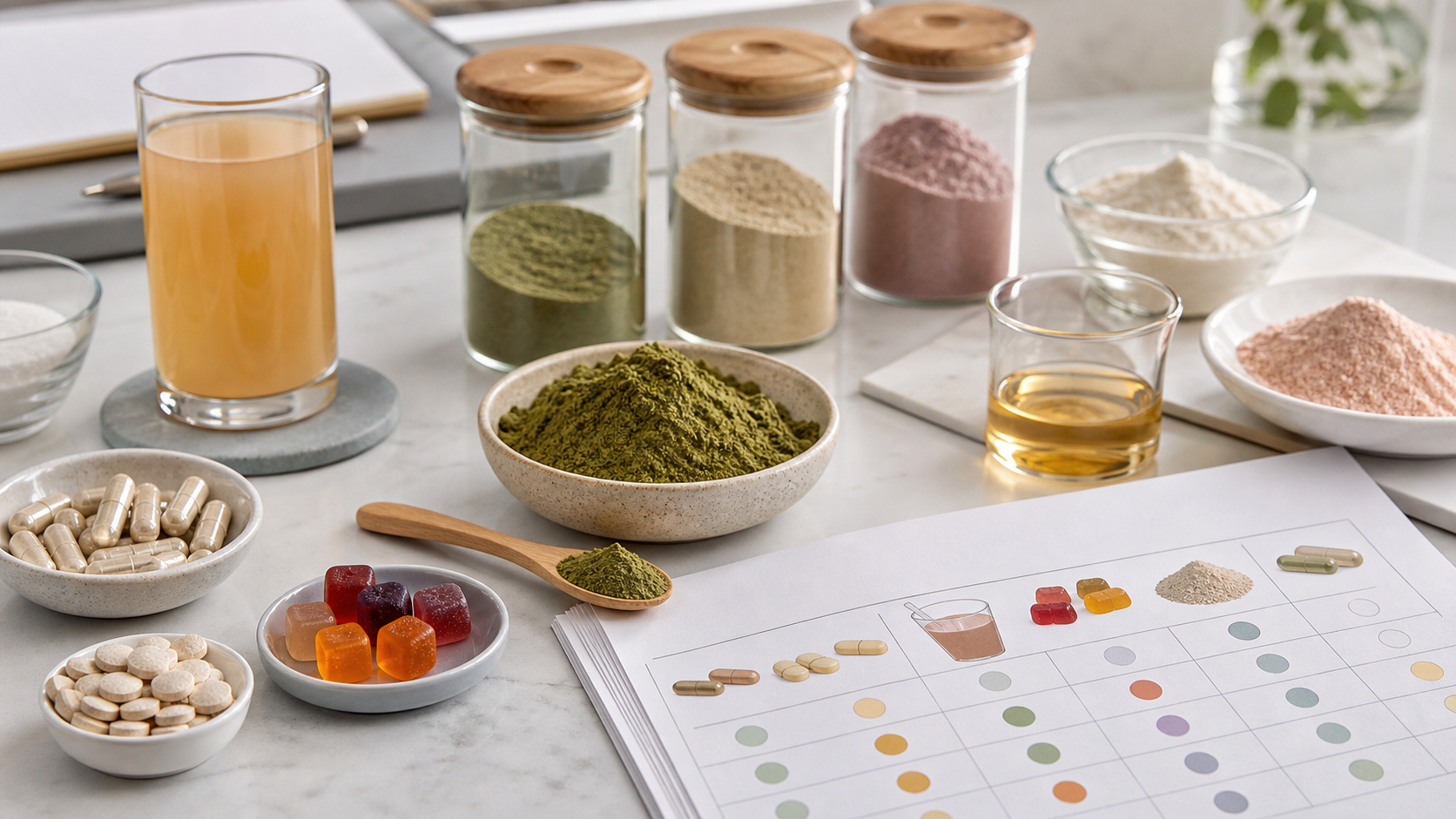
Specification should start from the finished product
The same ingredient can behave differently in capsules, tablets, beverages, gummies, powder blends and functional foods. Buyers often start by asking for a product name, but a better approach is to define the application first.
Application affects mesh size, solubility, taste, color, moisture, bulk density, carrier system and documentation requirements.
Capsules
For capsules, the key questions are usually powder flow, fill weight, bulk density and microbiology. A material with poor flowability may slow production or cause inconsistent fill weight.
Check:
- Mesh size
- Bulk density
- Flowability
- Moisture
- Microbiology
- Active assay consistency
Tablets
Tablet production may require more attention to compressibility and excipient compatibility. Some plant powders are fibrous or hygroscopic, which can affect hardness, disintegration and production efficiency.
Check:
- Particle size distribution
- Moisture
- Compressibility
- Carrier or excipient system
- Taste and color if chewable
- Stability under processing pressure
Instant beverages
For beverages, solubility and dispersibility are often more important than extract ratio alone. Some powders are only dispersible, not fully soluble. This can be acceptable if the finished product is a smoothie, but problematic for clear drinks.
Check:
- Water solubility
- Sedimentation
- Taste impact
- Color impact
- Carrier system
- Heat stability
Gummies
Gummies need special attention to heat, pH, taste and dosage. Some botanical extracts can become bitter, darken the formula or interact with gelling systems.
Check:
- Heat stability
- Taste masking needs
- Color impact
- Recommended dosage
- Water activity and moisture
- Regulatory status for the target market
Powder blends and meal replacements
Powder blends need consistent color, flavor, density and mixing performance. If the ingredient has strong taste or color, it may need lower dosage or a different specification.
Check:
- Color uniformity
- Flavor profile
- Bulk density
- Flowability
- Particle size compatibility
- Allergen and carrier information
Functional foods
Functional foods may involve heat, baking, extrusion or pH changes. Ask the supplier whether the ingredient has application experience in similar processing conditions.
Procurement takeaway
The right specification is not always the strongest specification. It is the specification that matches the finished product, quality target, processing route, market requirement and cost structure.